
Around the Pill and Digital Ecosystems — A New Frontier in Healthcare
In the last decade, the worlds of pharmaceutical innovation and digital technology have collided, creating new opportunities for improving patient outcomes and transforming healthcare delivery. Two key ideas have emerged at this intersection: “around the pill” solutions and digital ecosystems. While they may sound like buzzwords, both concepts represent profound changes in how healthcare is delivered, experienced, and managed in the 21st century.
In this article, we’re going to unpack these ideas, explore how they fit together, and look at how they are reshaping healthcare for patients, providers, and the broader industry.
What Is “Around the Pill”?
Traditionally, pharmaceutical companies focused on researching, manufacturing, and selling medications — literally the pills, injections, and other treatments that help cure or manage disease. However, in recent years, it’s become clear that medication alone — “the pill” — is not enough to ensure optimal health outcomes.
This realization gave rise to the concept of “around the pill.” Simply put, “around the pill” refers to digital services and tools that complement traditional medications. These might include mobile apps, wearable gadgets, reminders, education platforms, telehealth services, and data analytics tools designed to support patients before, during, and after taking a medication.
Think of these offerings as support services that enhance the medication experience. Instead of merely prescribing a pill and walking away, healthcare providers and pharma companies can now provide tools to help patients better adhere to treatment plans, manage side effects, track progress, and communicate more easily with their care teams.
For example:
- A mobile app that reminds patients when to take their medication
- A wearable sensor that tracks health data and shares it with doctors
- Educational programs and digital coaching to support behavioral change
These tools focus on engagement, support, and data — not just dispensing treatment.
In short, around the pill represents a shift towards holistic care — treating the person, not just the disease.
What Is a Digital Ecosystem?
To understand how “around the pill” fits into the larger picture, we need to look at digital ecosystems.
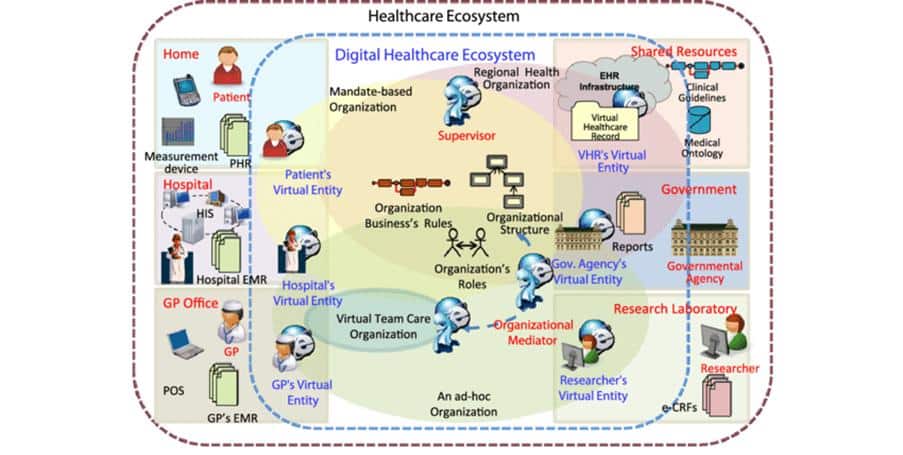
A digital ecosystem is a connected network of digital platforms, technologies, data sources, users, and services that work together to create value and deliver services. Originating from concepts in computing and inspired by natural ecosystems, digital ecosystems are designed to be adaptive, scalable, and collaborative.
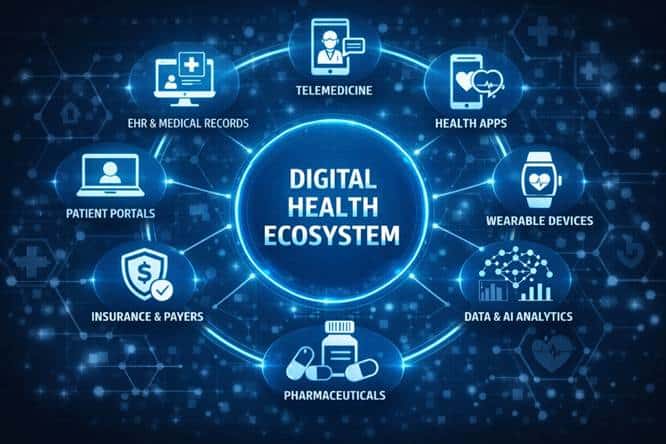
In the context of healthcare, a digital ecosystem might include:
- Electronic health records and clinical databases
- Patient portals and health apps
- Telemedicine platforms
- Wearable devices and sensors
- Data analytics and AI tools
- Insurance and payer systems
All these components are connected to create a holistic view of patient health, enabling better care coordination, real-time insights, and personalized health experiences.
Digital ecosystems allow for seamless data flow across different stakeholders — from patients and clinicians to researchers and payers — fostering collaboration, innovation, and ultimately better health outcomes.
How “Around the Pill” Fits Into Digital Ecosystems
While the idea of “around the pill” focuses on patient support tools associated with medication, digital ecosystems provide the infrastructure that lets those tools work together.
Here’s how they intersect:
1. Shared Data and Insights
Digital ecosystems allow data from “around the pill” services — such as adherence tracking, symptom reporting, and wearable data — to flow securely between patients, clinicians, and care platforms. This interconnection helps create a more complete picture of a patient’s health journey.
For instance, a patient using a medication reminder app might also use a heart rate monitor that feeds data into a broader digital health platform. That platform can alert providers if the patient’s data shows concerning trends, enabling proactive care.
2. Cross-Platform Integration
Digital ecosystems make it possible for different applications to work together. A diabetes app, medication tracker, and telehealth platform can all be part of a patient’s digital health toolkit — and because they are integrated, they can share information seamlessly.
This leads to:
- Better continuity of care
- More personalized treatment
- Reduced administrative burden for clinicians
- 3. Enhanced Patient Engagement
- Being part of a digital ecosystem means patients can access information, tools, and support at multiple points in their care journey — not just when they’re taking a pill. They might receive educational content, reminders, lifestyle guidance, or feedback from AI-driven analytics — all designed to keep them engaged and informed.
- This leads to better treatment adherence and outcomes — one of the key goals of “around the pill” offerings.
4. Real-World Evidence for Better Decisions
- As digital ecosystems connect more data from diverse sources, this data becomes a powerful resource for clinical and business decisions. Pharma companies can analyze aggregated, anonymized data to understand how medications are used in real life — leading to better therapies, improved safety monitoring, and stronger evidence for regulatory discussions.
Examples of Around the Pill Innovations
Here are some real and emerging examples of how “around the pill” and digital ecosystems are manifesting:
- Medication Adherence Tools
- Apps and connected devices that remind patients to take their medication — and collect data on whether they did — help improve treatment adherence and can alert providers if a patient misses doses.
- Health Monitoring Apps
- Apps that track symptoms, lifestyle factors, and vitals can provide valuable insight alongside medication regimes, helping clinicians tailor treatment plans more effectively.
- Telehealth and Remote Care
Telemedicine platforms integrated into digital ecosystems make it easier for patients to consult with specialists, access second opinions, and receive ongoing support without travel barriers.
- Digital Therapeutics
- These are clinically validated software programs that can treat or manage disease digitally. Some are designed to work alongside medication therapies, especially for chronic conditions like addiction, insomnia, or diabetes.
- Smart Pills
- A cutting-edge concept in the digital medicine space is the digital pill — a pill embedded with an ingestible sensor that transmits data about medication taking and physiological responses. While still early in adoption, digital pills represent an extreme form of digitizing medication itself.
Why This Matters — For Patients and Healthcare
- The shift toward digital ecosystems and “around the pill” approaches is not just a technology trend — it’s a transformational change in healthcare delivery with real benefits:
- . Better Patient Outcomes
- By combining medication with digital support tools, patients are more likely to stay engaged with their care plans, leading to improved health outcomes.
- 2. Personalised Care
- Digital ecosystems enable tailored treatment strategies based on individual patient data, preferences, and behavior patterns.
Patient Adoption
Not all patients are comfortable with digital tools — especially older adults or those with limited access to technology.
Nevertheless, as innovation continues and digital health tools become more widespread and user-friendly, these challenges are slowly being addressed by industry leaders.
The Road Ahead
Looking forward, the combination of digital ecosystems and around the pill solutions signals a broader evolution toward digital medicine — where data, connectivity, and personalized engagement become just as important as the therapeutic compounds themselves.
We will likely see:
- Increased integration of AI and predictive analytics
- Growth of prescription digital therapeutics
- More regulatory frameworks for digital medicine
- Expansion of ecosystems linking patients, clinicians, and industry
The ultimate goal? Better health for individuals and populations — not just more effective pills.
“Around the pill” and digital ecosystems are more than jargon — they are shaping a new era of healthcare that is data-driven, connected, and patient-centric. By integrating traditional medicine with smart digital tools and platforms, we are moving toward a future where care is continuous, personalized, predictive, and empowering.